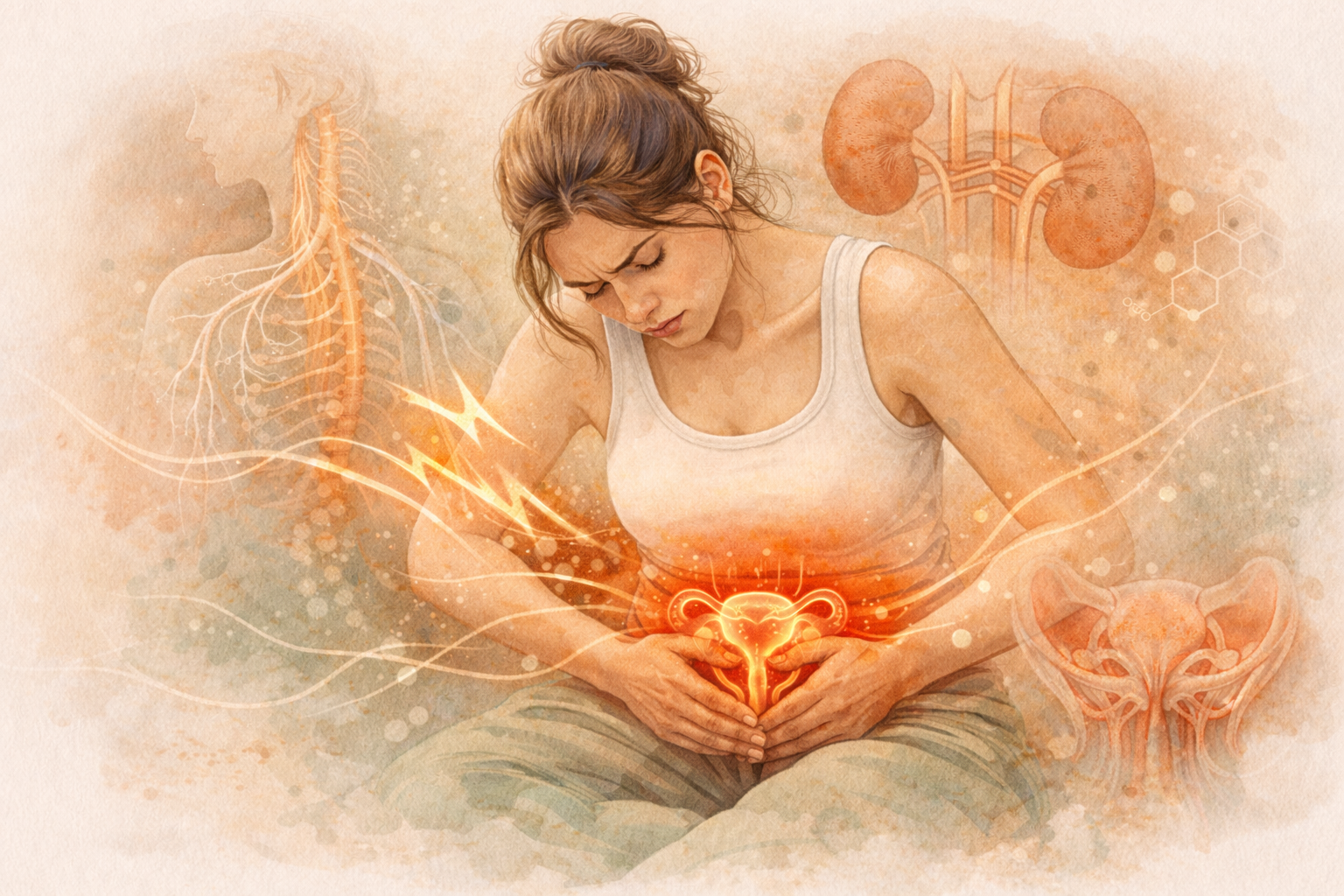
Bladder Weakness Is a Coordination Problem — Not Just a Bladder Issue

Urgency, leakage, or incomplete emptying arise when nerves, muscles, support, and circulation lose coordination. Restore the system — bladder regains control.

Not Just Leakage — A System Issue

The bladder must store and release urine smoothly. This requires coordination between bladder muscle, nerves, pelvic floor, and tissue support.

When coordination weakens, symptoms appear — urgency, leakage, weak flow, or incomplete emptying.

The bladder is the messenger — not the root cause.

Bladder functional physiology

The 6 Functional Drivers of Bladder Weakness

Overactive / Irritable Bladder

Bladder becomes too sensitive and contracts too early.

Weak Bladder Muscle

Bladder cannot empty fully due to weak contraction.

Pelvic Floor Weakness

Loss of support causes leakage during pressure.

Nerve Coordination Issue

Bladder and brain signals lose synchronisation.

Hormonal / Tissue Weakening

Tissue thinning reduces bladder control.

Pelvic Congestion / Fluid Stagnation

Poor circulation pressures bladder function.

60-Second Bladder Functional Pattern Quiz

Select what applies to you. Each selection reveals what your bladder may be signalling.

Urgency & Irritation

Weak Emptying

Pelvic Support

Nerve Signals

Tissue & Hormonal

Circulation & Congestion

Restore the Dominant Functional Axis

  • Bladder muscle tone & coordination
  • Nerve regulation (sacral–autonomic)
  • Pelvic floor strength & support
  • Hormonal & tissue integrity
  • Pelvic circulation & fluid drainage
  • Mucosal resilience & irritation control
Bladder weakness rarely has a single cause. A personalised evaluation helps identify whether nerves, muscles, pelvic support, tissue health, or circulation is the main driver — allowing targeted correction rather than temporary symptom control.