Vaginal Dryness Is a Body Signal — Not Just a Local Issue

Lubrication reflects hormones, nerves, circulation, and tissue health. Restore the system — moisture returns naturally.

Vaginal Dryness Reflects Internal Balance

Vaginal moisture depends on hormones, pelvic blood flow, nerves, and tissue nourishment — not just local glands.

When lubrication reduces, it usually means the body is conserving fluids, circulation is weak, or hormonal signals are low.

The vagina reflects body physiology — not just local health.
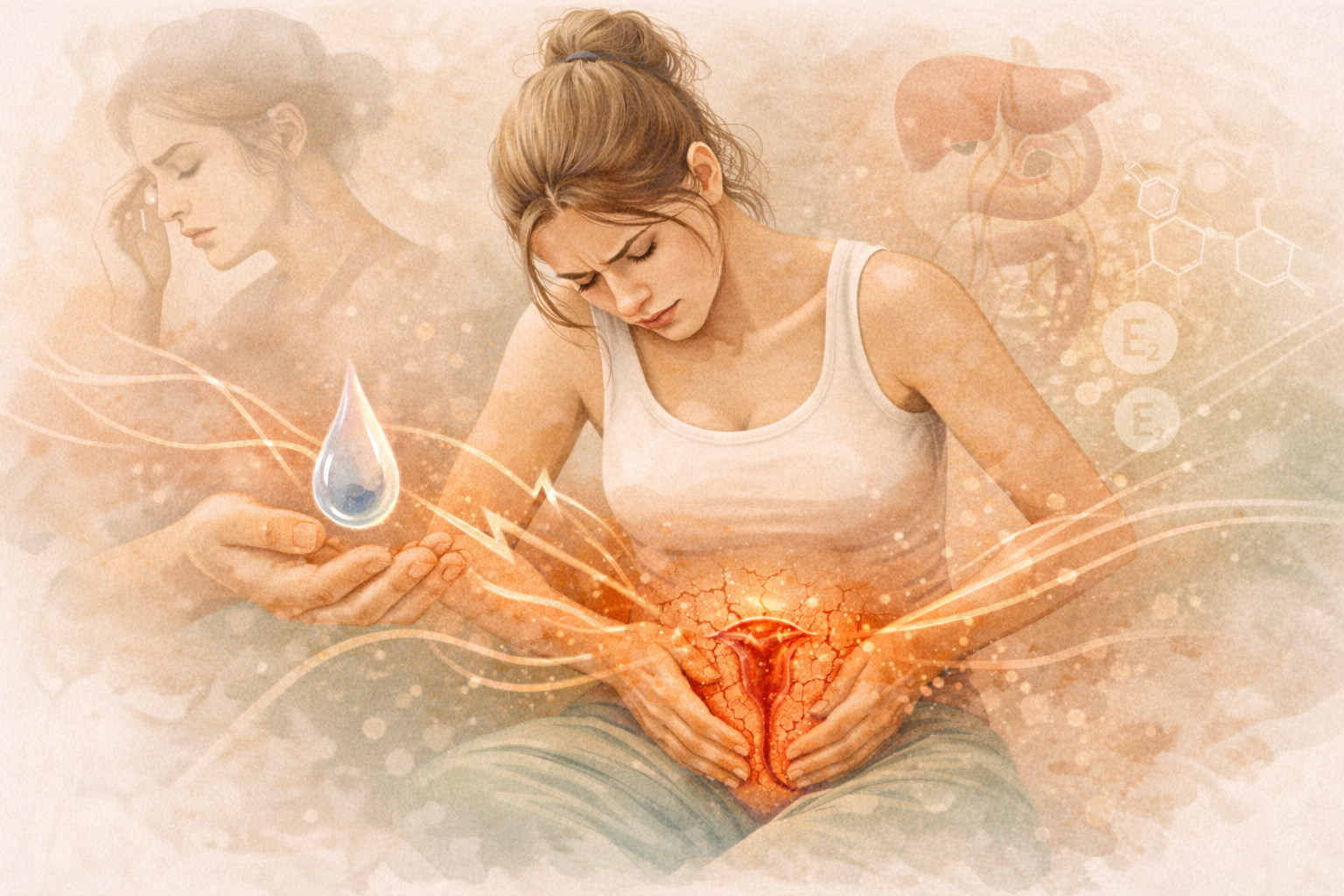
Vaginal dryness functional physiology

The 6 Functional Drivers of Vaginal Dryness

Hormonal Support Low

Estrogen decline reduces natural moisture and tissue softness.

Pelvic Circulation Weak

Low blood flow reduces lubrication and tissue nourishment.

Stress & Nerve Imbalance

Stress shuts down natural lubrication response.

Tissue Nutrition Low

Weak tissue hydration and repair cause dryness.

Body Fluid Depletion

Systemic dryness reduces mucosal moisture.

Mucosal & Microbiome Weak

Healthy vaginal lining is needed for natural lubrication.

60-Second Vaginal Dryness Pattern Quiz

Hormonal Signals

Pelvic Circulation

Stress & Nerves

Tissue Nutrition

Body Fluid Balance

Local Tissue & Microbiome

Restore the Dominant System

Vaginal dryness improves when hormones, circulation, nerves, and tissue hydration are restored together. A personalised approach identifies which system needs primary support.
One-to-one consultation helps identify your dominant functional driver, subtle hormonal patterns, pelvic circulation state, and tissue health — allowing precise, personalised correction rather than guesswork.