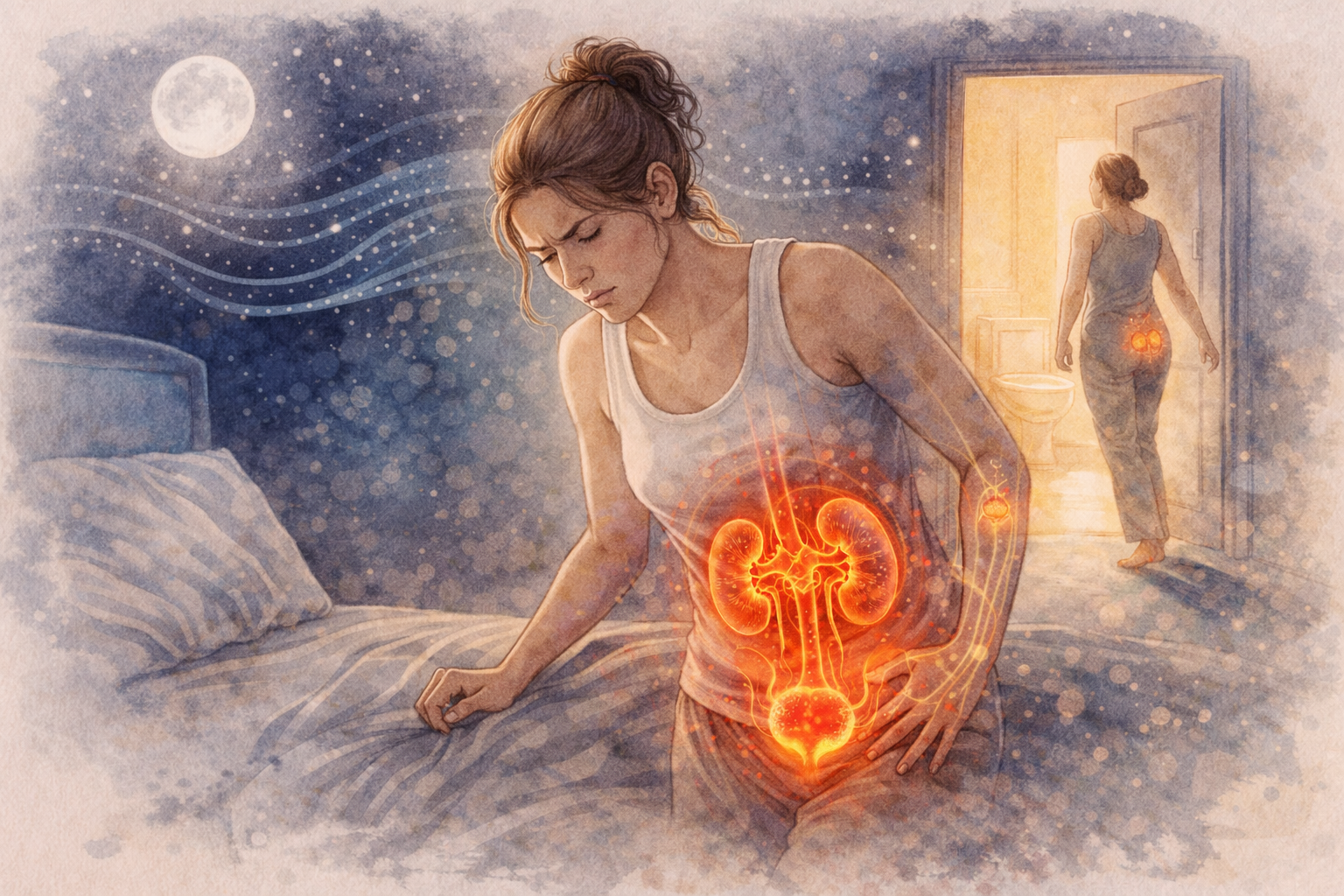
Night Urination Is a Body Rhythm Issue — Not Just a Bladder Problem

When kidneys, bladder, sleep, circulation and hormones lose coordination, the body shifts into night-time fluid release instead of rest. Restore night physiology — urination normalises.

What Is Nocturia (Night Urination)?

Normally at night, the body conserves water and keeps the bladder quiet. When this night rhythm fails, urine production or bladder sensitivity increases.

Night urination may arise from kidneys, bladder, nerves, hormones, circulation, sleep quality or fluid balance.

The bladder is the messenger — not always the cause.

Nocturia physiology

The 6 Functional Drivers of Night Urination

Excess Night Urine Production

Kidneys release too much fluid during night.

Bladder Storage Weakness

Bladder cannot hold urine through the night.

Sleep & Nervous System Trigger

Light sleep or stress wakes the body to urinate.

Fluid Shift from Legs

Daytime fluid returns to kidneys when lying down.

Hormonal & Metabolic Drivers

Sugar, thyroid or estrogen affect urine rhythm.

Kidney–Adrenal Night Weakness

Body cannot conserve fluid during rest phase.

60-Second Night Urination Functional Self-Check

Excess Night Urine


Bladder Sensitivity


Sleep & Nerves


Fluid Redistribution


Hormones & Sugar


Kidney–Adrenal Weakness


Correct the Dominant Functional Axis

Night urination improves when the body restores deep sleep rhythm, fluid balance, bladder calmness, circulation and kidney conservation. Identifying the dominant driver allows precise correction instead of temporary symptom control.
A one-to-one consultation helps identify whether your night urination is driven by kidney rhythm, bladder sensitivity, sleep disturbance, circulation, hormones or metabolic imbalance — and guides personalised correction for lasting improvement.