Pelvic Floor Weakness Is a System Imbalance — Not Just Weak Muscles

Urine leakage, heaviness, or prolapse happen when muscles, nerves, pressure, and tissue support lose coordination. Restore the system — strength returns.

What Pelvic Floor Weakness Really Means

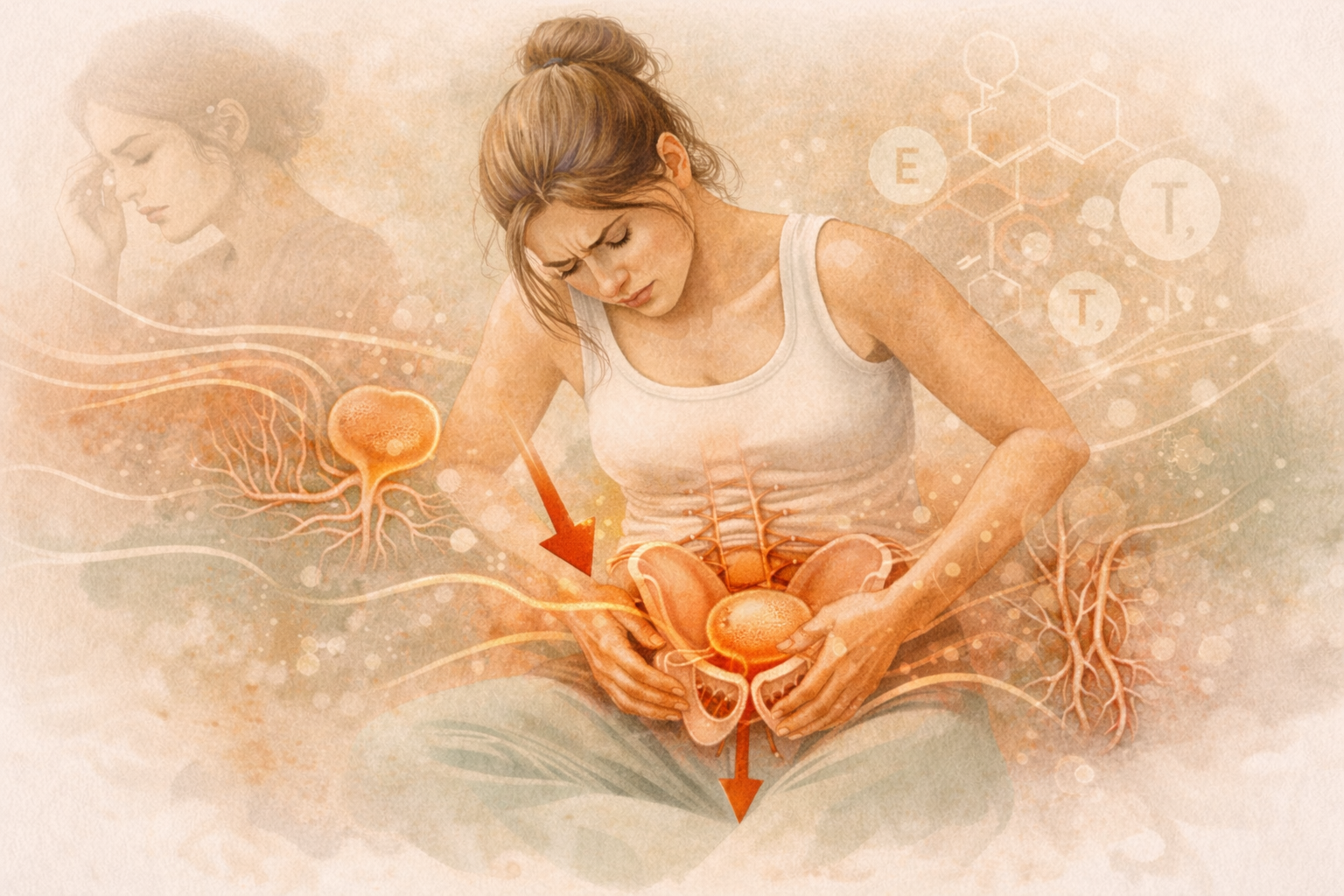
The pelvic floor is a support system holding the bladder, uterus, and bowel in place. When muscle tone, tissue strength, nerve control, or pressure balance weaken — symptoms appear.

Leakage, heaviness, or organ descent are signals of reduced support — not just muscle weakness.

Strength returns when pressure, nerves, tissue, and circulation are corrected together.
Pelvic floor functional physiology

The 5 Functional Drivers of Pelvic Floor Weakness

Muscle Tone Loss

Pelvic muscles lose strength and reflex tightening.

Tissue & Ligament Laxity

Support structures stretch and lose firmness.

Nerve Weak Signaling

Delayed or weak contraction signals reduce control.

Chronic Pressure Load

Constipation, cough, or weight push downward.

Pelvic Congestion

Poor circulation weakens tissue nutrition and tone.

60-Second Pelvic Floor Functional Self-Check

Select what applies to you. Each selection reveals a functional signal.

Bladder & Control

Pressure & Heaviness

Support & Circulation

Correct the Dominant Functional Axis

  • Pelvic muscle tone & reflex activation
  • Connective tissue & ligament support
  • Nerve signaling & pelvic control
  • Pressure regulation & core balance
  • Pelvic circulation & tissue nutrition

Pelvic floor weakness develops differently in each person — muscle, nerves, hormones, pressure, or tissue may dominate. A one-to-one consultation helps identify your root driver and correct the system instead of only managing symptoms.