What Perimenopause Really Means
Perimenopause is a transition where the brain–ovary rhythm becomes irregular before hormones decline.
Symptoms arise from instability — not just deficiency.
The body is recalibrating — not failing.
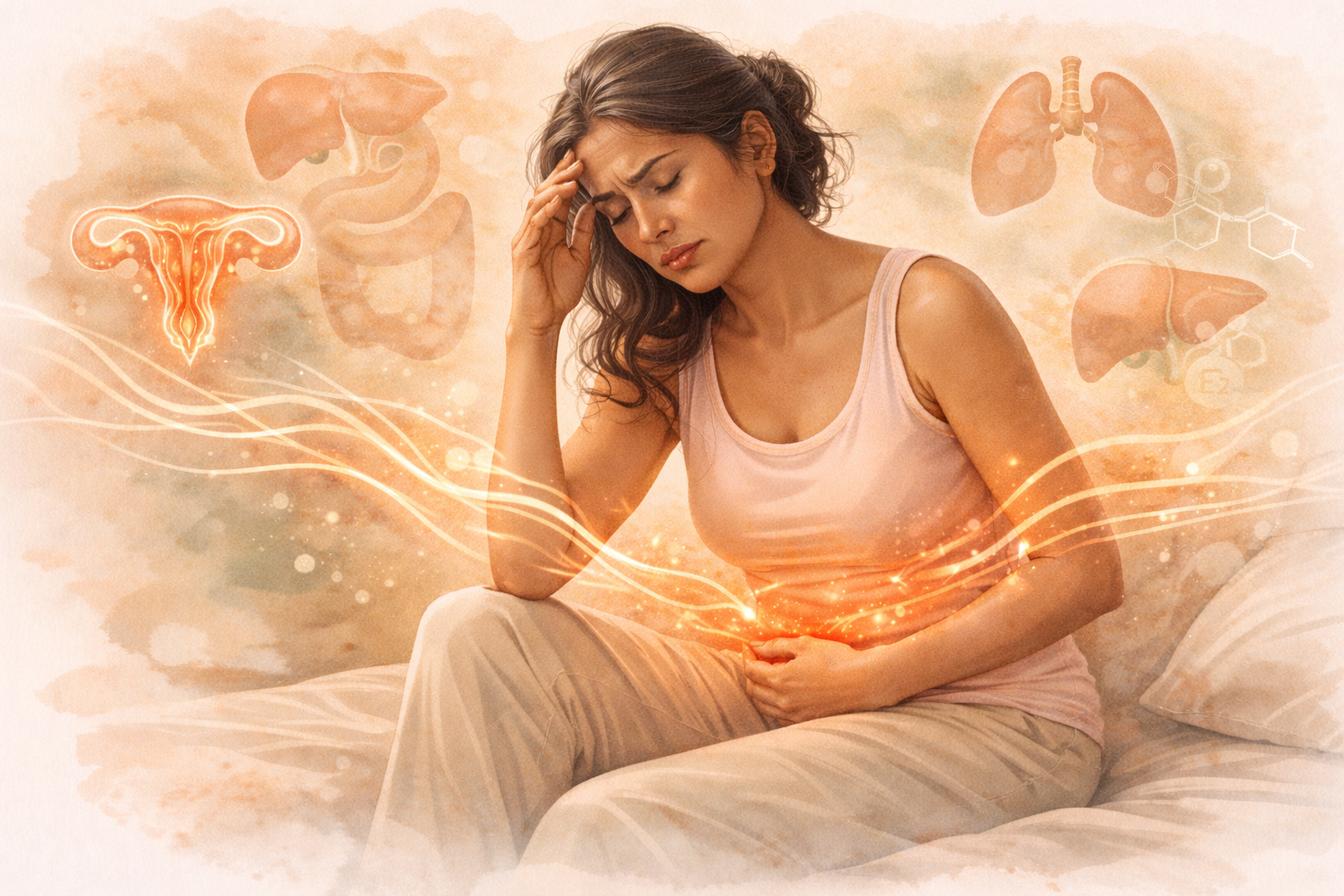
Hormones fluctuate, nerves become sensitive, metabolism shifts, and the body recalibrates. Stabilise the system — symptoms settle.
Perimenopause is a transition where the brain–ovary rhythm becomes irregular before hormones decline.
Symptoms arise from instability — not just deficiency.
The body is recalibrating — not failing.
Brain–ovary communication becomes irregular.
Reduced progesterone increases nervous system sensitivity.
Hormone swings disturb temperature and blood vessels.
Stress system struggles to compensate for hormonal change.
Hormones remain biologically loud when clearance slows.
Metabolism and temperature regulation decline.
Gut bacteria influence hormone balance.
Select what applies to you. Each selection reveals a functional signal.
Perimenopause differs for every woman because different systems dominate — nerves, hormones, liver, thyroid, gut, or stress axis. A personalised functional approach identifies the dominant driver and stabilises it.