Low Libido Is a Body Signal — Not Just a Desire Problem

Desire depends on hormones, nerves, blood flow, emotions, and energy. When the system is supported — libido returns naturally.

Libido Reflects Whole-Body Balance

Low libido is not a single disease. It happens when the brain, hormones, circulation, emotions, or energy are not in harmony.

Desire fades when the body feels stressed, tired, hormonally low, emotionally blocked, or physically cold.

Restore the system — desire follows.
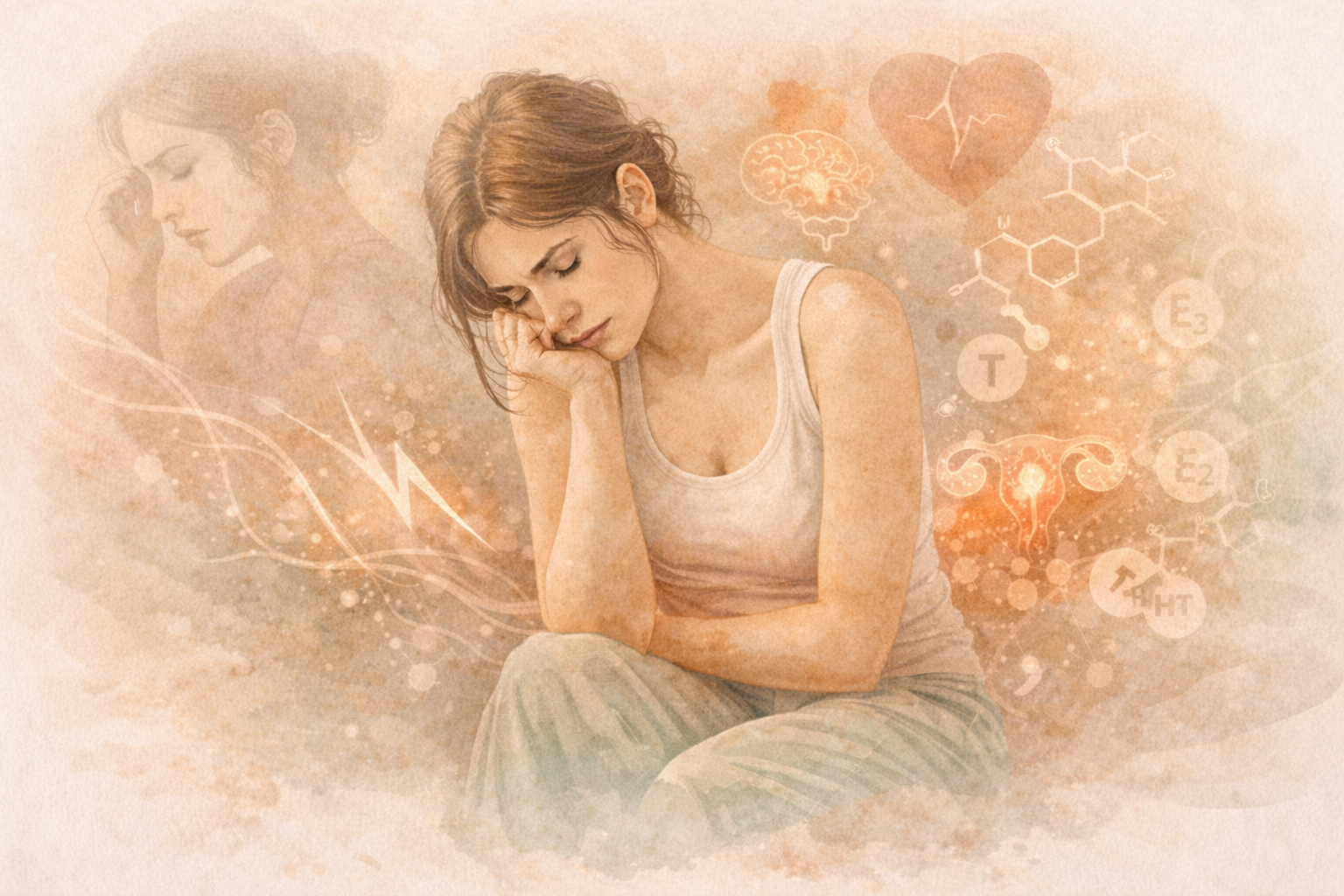
Low libido functional physiology

The 6 Functional Drivers of Low Libido

Nervous System Fatigue

Stress and burnout suppress desire signals.

Hormonal Weakness

Low estrogen or testosterone reduces desire.

Poor Pelvic Blood Flow

Weak circulation reduces sensation and arousal.

Emotional / Liver Block

Stress and emotional tension block desire flow.

Relaxation & Safety Failure

Body cannot relax enough to allow desire.

Low Energy / Vitality

When energy is low, libido switches off.

60-Second Libido Pattern Quiz

Select what applies. Each choice reveals what your body may be signalling.

Stress & Nervous State

Hormonal Signals

Pelvic Circulation

Emotional Flow

Relaxation & Safety

Energy & Vitality

Correct the Dominant Driver

Libido improves when the body regains balance in:
  • Nervous system and stress response
  • Hormonal harmony
  • Pelvic circulation and warmth
  • Emotional and liver balance
  • Relaxation and safety signals
  • Energy and vitality
Every woman’s pattern is different. A personalised consultation helps identify the dominant driver, underlying organ imbalance, and the most suitable corrective approach for your body.