Ovarian Cysts Are a Functional Imbalance — Not a Structural Disease

Cysts form when ovulation rhythm, pelvic circulation, hormones, and nerve signals fall out of sync. Restore coordination — cysts regress.

What an Ovarian Cyst Actually Represents

An ovarian cyst is not a random growth — it is a follicle or luteal structure that failed to complete its normal life cycle.

This happens when ovulation signaling, blood flow, lymphatic drainage, or hormonal clearance becomes inefficient.

The cyst is the symptom. The imbalance lies upstream.
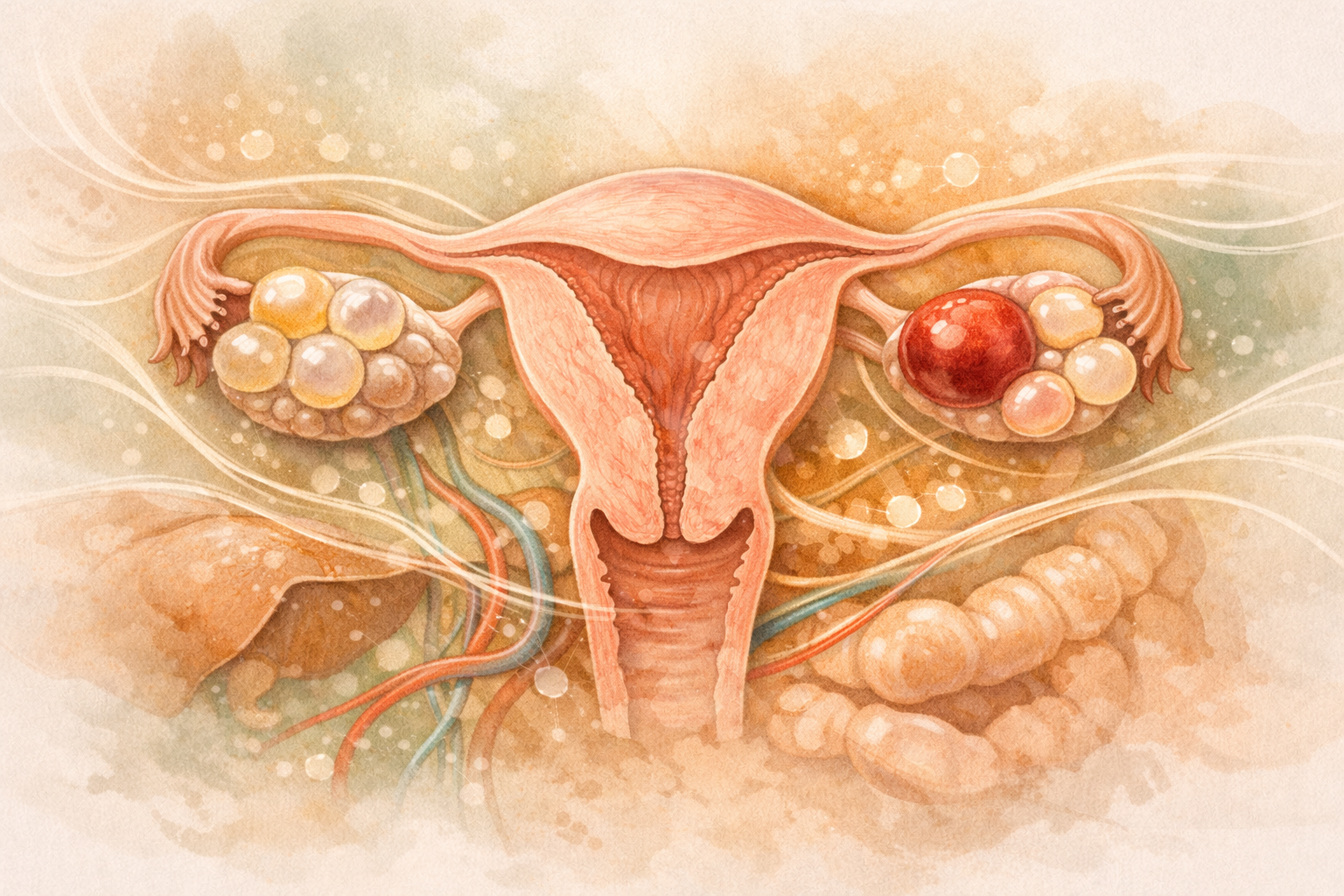
Ovarian cyst functional physiology

The 5 Functional Drivers Behind Ovarian Cysts

Ovulatory Rhythm Disruption

Follicles grow but fail to rupture or regress.

Pelvic Circulatory Stagnation

Poor venous and lymphatic drainage traps fluid.

Neuro-Endocrine Signal Delay

Stress alters LH–FSH timing and ovarian response.

Liver & Hormonal Clearance Load

Estrogen remains biologically active longer.

Low-Grade Inflammation

Inflammation alters follicular tissue behavior.

60-Second Ovarian Cyst Functional Quiz

Select what applies to you. Each choice reveals a functional driver.

Menstrual & Ovulatory Signals

Pelvic Circulation & Pressure

Digestion, Stress & Inflammation

Correct the Dominant Functional Axis

  • Ovulatory rhythm & ovarian signaling
  • Pelvic blood and lymphatic circulation
  • Neuro-endocrine stress regulation
  • Liver-gut hormonal clearance
  • Inflammatory tissue environment