Adenomyosis Is Not “Just a Uterus Problem”

Adenomyosis develops when hormones, nerves, circulation, and healing lose coordination. Correct the system — the uterus can calm.

What Adenomyosis Really Means

In adenomyosis, the inner lining of the uterus grows into the muscle layer. This makes the uterus thick, sensitive, and over-reactive.

Over time, this leads to heavy bleeding, pain, pressure, and exhaustion — especially when hormones and nerves are unstable.

The uterus is responding to mixed signals — not failing on its own.
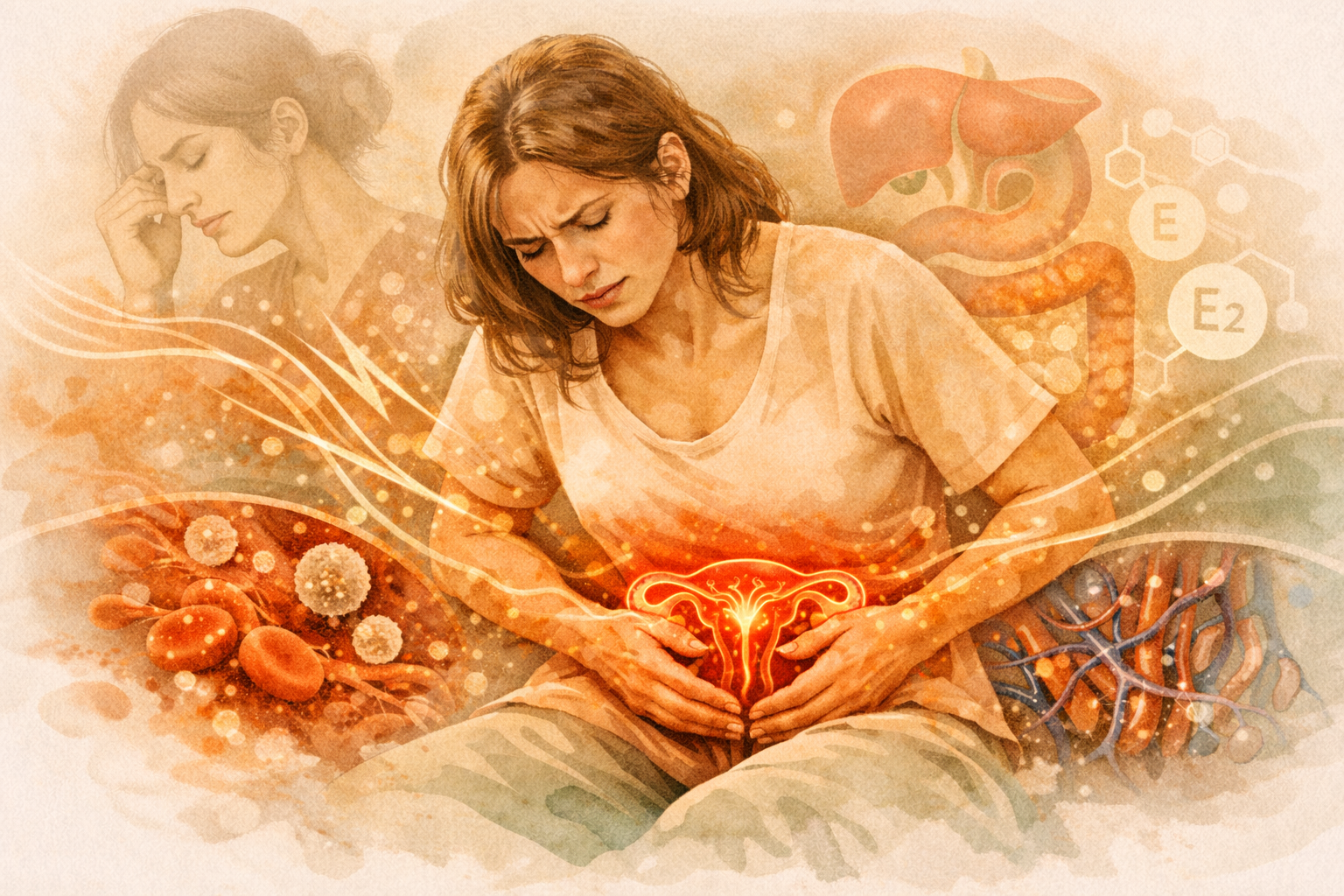
Functional view of adenomyosis

The 5 Functional Drivers of Adenomyosis

Hormone Imbalance

Estrogen acts strongly while progesterone calming support is low.

Nervous System Overload

Stress keeps the uterus tense, sensitive, and poorly regulated.

Poor Pelvic Circulation

Blood flow enters easily but drains poorly, causing congestion.

Chronic Inflammation

The uterus stays in an “injured” state without proper healing.

Liver & Gut Load

Hormones are not cleared efficiently and remain biologically loud.

60-Second Adenomyosis Pattern Quiz

Select what applies to you. Each choice reveals a functional signal.

Bleeding Pattern

Pain & Sensation

Body & Energy Signals

Correcting the Root Cause

  • Calm the nervous system
  • Stabilise hormonal signalling
  • Improve pelvic circulation
  • Reduce inflammation
  • Support liver & gut clearance
Adenomyosis rarely has a single cause. A one-to-one consultation allows us to identify which system is driving your symptoms and design treatment that works with your body — not against it.