Oligomenorrhea Is a Timing Problem — Not Just a Period Issue

When the brain, hormones, blood, and energy systems fall out of sync, periods arrive late, irregular, or unpredictably.

What Is Oligomenorrhea — Functionally?

Oligomenorrhea means periods come late — often more than 35 days apart — or skip entirely for months.

Functionally, this happens when the body delays ovulation because internal signals are unclear, weak, or suppressed.

The uterus waits. The ovary hesitates. The brain pauses the signal.
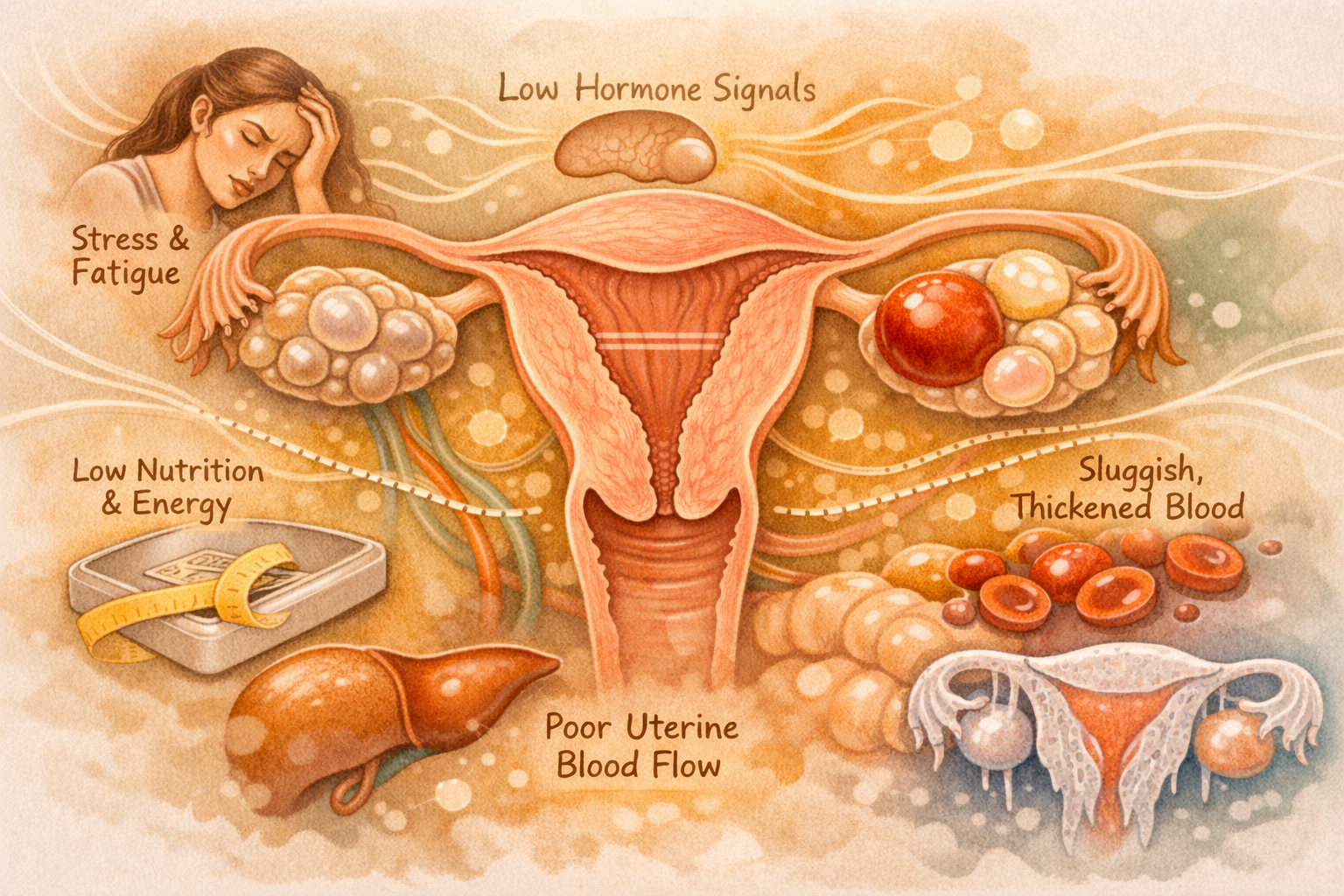
Oligomenorrhea functional physiology

The 5 Common Functional Drivers of Delayed Periods

Stress & Nervous System Overload

Ongoing stress tells the brain reproduction is not a priority.

Low Energy Availability

Under-eating, over-exercising, or poor absorption delays ovulation.

Metabolic or Insulin Stress

Blood sugar instability confuses ovarian hormone signals.

Low or Poor-Quality Blood

When blood is weak or insufficient, the body postpones menstruation.

Hormone Clearance Issues

Poor liver–gut clearance keeps hormonal signals noisy and delayed.

60-Second Delayed Period Pattern Quiz

Select what feels true for you. Each choice reveals a functional clue.

Cycle & Timing Signals

Energy & Metabolism

Body & Blood Signals

Why Personalised Care Matters in Oligomenorrhea

Delayed periods rarely have a single cause. Stress, nutrition, metabolism, blood health, and hormone clearance often overlap in unique ways.

A one-to-one consultation helps identify which system is asking for attention first — so the body can safely restore its natural rhythm.